The best coffee shop brands in the Middle East
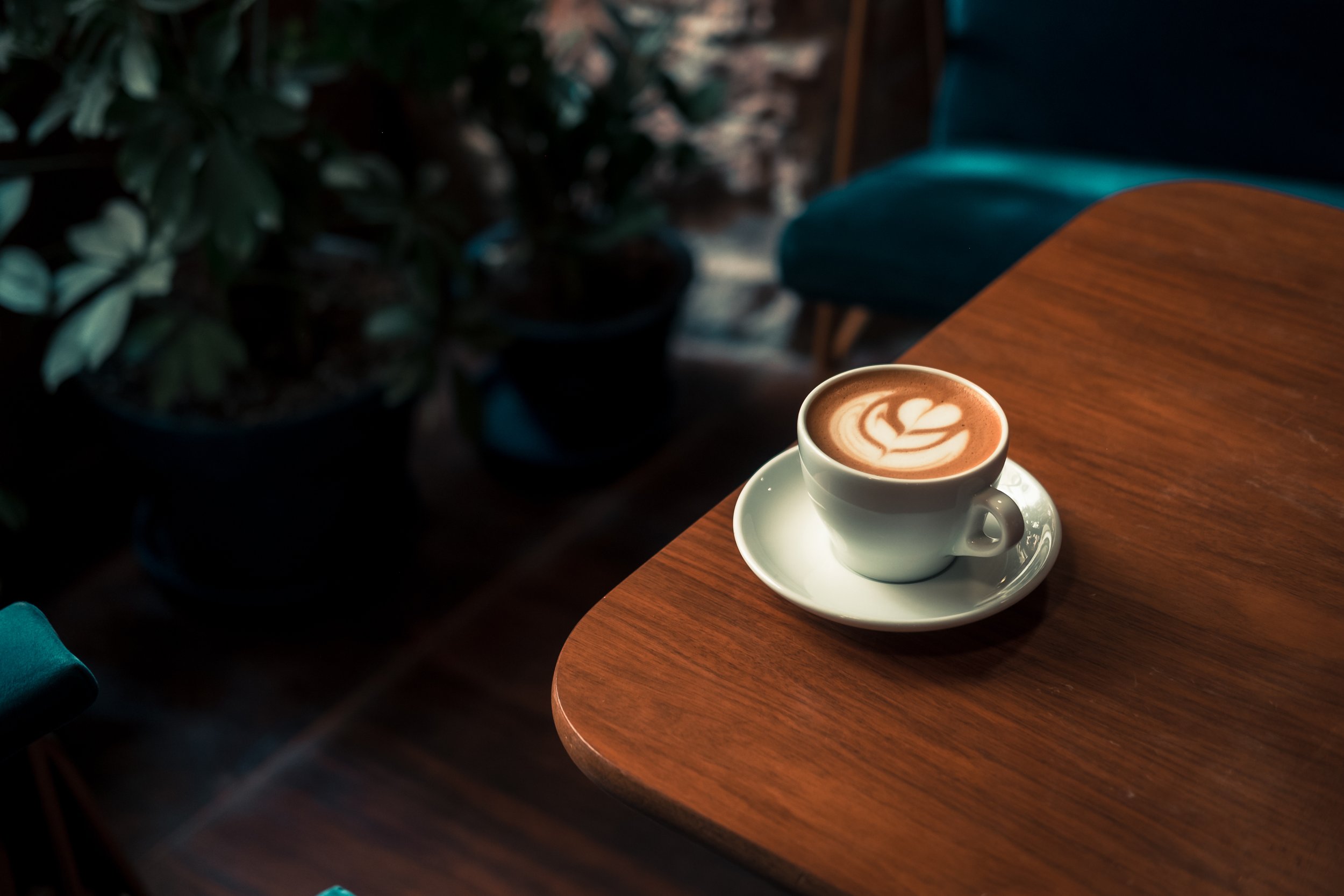
Coffee in the Gulf stopped being about coffee some time ago.
It's a category where the interiors are photographed more than the product, where a drive-through can be a luxury experience, and where a new opening competes with dozens of concepts that are all, genuinely, very good.
Which makes it one of the most interesting places in the world to look at hospitality branding. Design alone doesn't differentiate here, because everyone has it. What separates the brands people return to is something harder.
Here are the ones doing it best, and what they have in common.

%Arabica
Dubai, Abu Dhabi, Riyadh
The Japanese-founded brand that made minimalism a coffee proposition rather than a design choice.
What makes it work is discipline. One mark, one typeface, a monochrome palette, glass walls and a visible espresso bar, applied identically in every city. There's no local adaptation and no seasonal campaign. The consistency is the brand.
It's also the clearest proof in the region that a visual identity can carry as much weight as the product. Most customers couldn't tell you where the beans come from. They can draw the logo.

Brew92
Jeddah, Riyadh, Al-Khobar
Founded in Jeddah, and arguably the brand that built Saudi Arabia's specialty coffee scene rather than joining it.
The positioning is interesting because it's local without being traditional. Locally roasted beans, international collaborations, coffee education in the flagship stores. The spaces mix industrial materials with a distinctly modern luxury, and the branding stays deliberately dynamic rather than fixed.
What Brew92 understood early is that being first in a category is only an advantage if you keep claiming it.

Saddle
Dubai, Abu Dhabi, Riyadh, Jeddah
Started as a high-end food truck, now a chain of cafés, and the region's best example of lifestyle branding applied to coffee.
The equestrian theme could easily have been decorative. Instead it does real work: it gives the brand a world rather than a look, which is why the packaging, the drive-through and the social presence all feel like the same thing rather than three departments.
Saddle sells status, and it's honest about it. That clarity is why it works.

Drop Coffee
Dubai
Stockholm-founded, and a study in restraint.
Everything about the brand signals precision: traceable sourcing, transparent roasting, a stripped-back identity, interiors built from natural materials and soft light. It's the least performative brand on this list and it's aimed squarely at people who care about the coffee itself.
Worth noting because it's the counter-example. In a market that rewards spectacle, Drop demonstrates that a narrow, confident position also works.
What the strong ones have in common
Four things, and none of them is design quality.
They know exactly who they're for. %Arabica isn't for everyone. Neither is Drop. Neither is Saddle. Each has chosen a customer and accepted the ones it loses.
They own something a competitor can't copy. A theme, a heritage, a discipline, a category claim. Not a colour palette.
They're consistent to the point of stubbornness. The temptation in a fast market is to keep adjusting. The brands that build recognition here mostly don't.
They work at phone scale. A significant share of discovery happens on a screen before anyone visits, so the identity has to survive being small, cropped and photographed by someone else. The strongest brands here have something visually distinctive that appears in customers' own photographs.

Two I've worked on
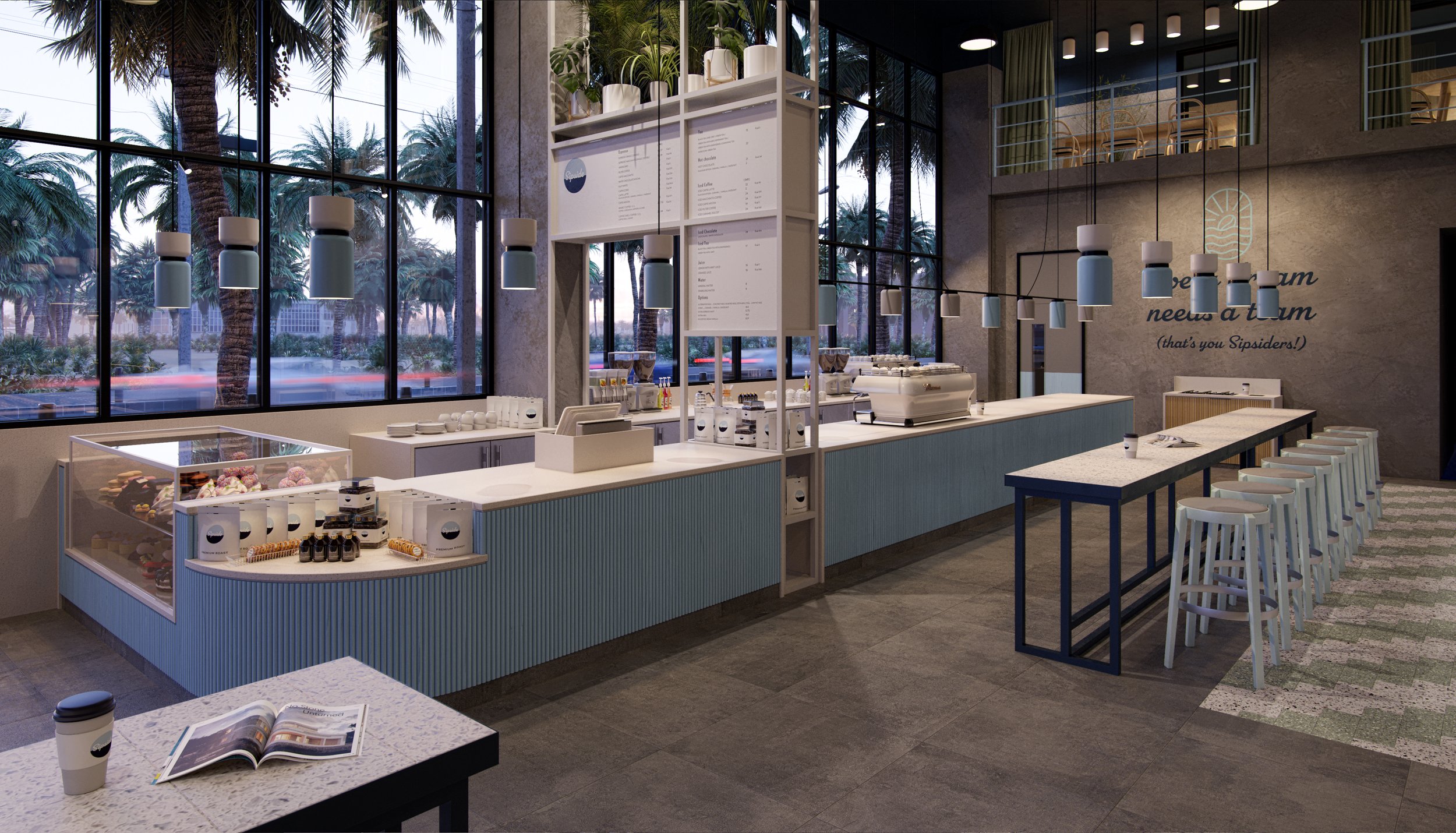
Sipside, Jeddah Sipside was positioned as a social destination rather than a place that sells coffee, and named to say so. The name suggests sipping, seaside and sitting a while, which gave the brand its tone, its story and a visual direction before any design started.
Coastal Jeddah informed the palette and the mood: relaxed but premium, built for families, young professionals and people meeting for two hours rather than ten minutes. I worked on naming, positioning, identity and the experience across interiors and digital.
Jebena Co, Dubai The jebena is the vessel at the centre of Ethiopian coffee ceremony, and naming the brand after it gave the business a story before it had a single customer.
The identity is built on that heritage rather than referencing it decoratively: warm, earthy, detailed, and carried consistently from packaging through to the space. The commercial value isn't that the story is charming. It's that customers are buying craft and tradition, which is harder for a competitor to undercut on price.
The thing worth taking from all of this
Every brand here is well designed, and that isn't why any of them works.
They work because each one has a clear answer to why someone should choose it, and everything visible follows from that answer. In a market this crowded, positioning is the only thing that reliably separates concepts, and it's the part most new openings skip.
If you're building something in the region, that's the part worth getting right before anything is drawn.
Tell me what you're building
If you're building a coffee or hospitality concept for the Gulf, I'd like to hear about it. Tell me where you are and I'll come back to you within a working day.