What London's best hotel brands get right
London has more genuinely well-branded hotels than almost anywhere.
Not because the logos are better. Because the strongest ones have decided exactly what kind of place they are, and every decision after that follows from it. The room, the tone at the front desk, the weight of the key, the way the website behaves.
Here are six doing it well, and what separates them.

Claridge's
Mayfair
Few hotels can match the prestige of Claridge's. Since the 1850s it has been synonymous with British luxury, and the branding is rooted in that: Art Deco lettering, refined typography, green and gold.
What makes it work is restraint about change. Contemporary touches enhance rather than disrupt, which is much harder than it sounds when heritage is the asset. Every generation of management could improve it, and the discipline is in mostly not doing so.
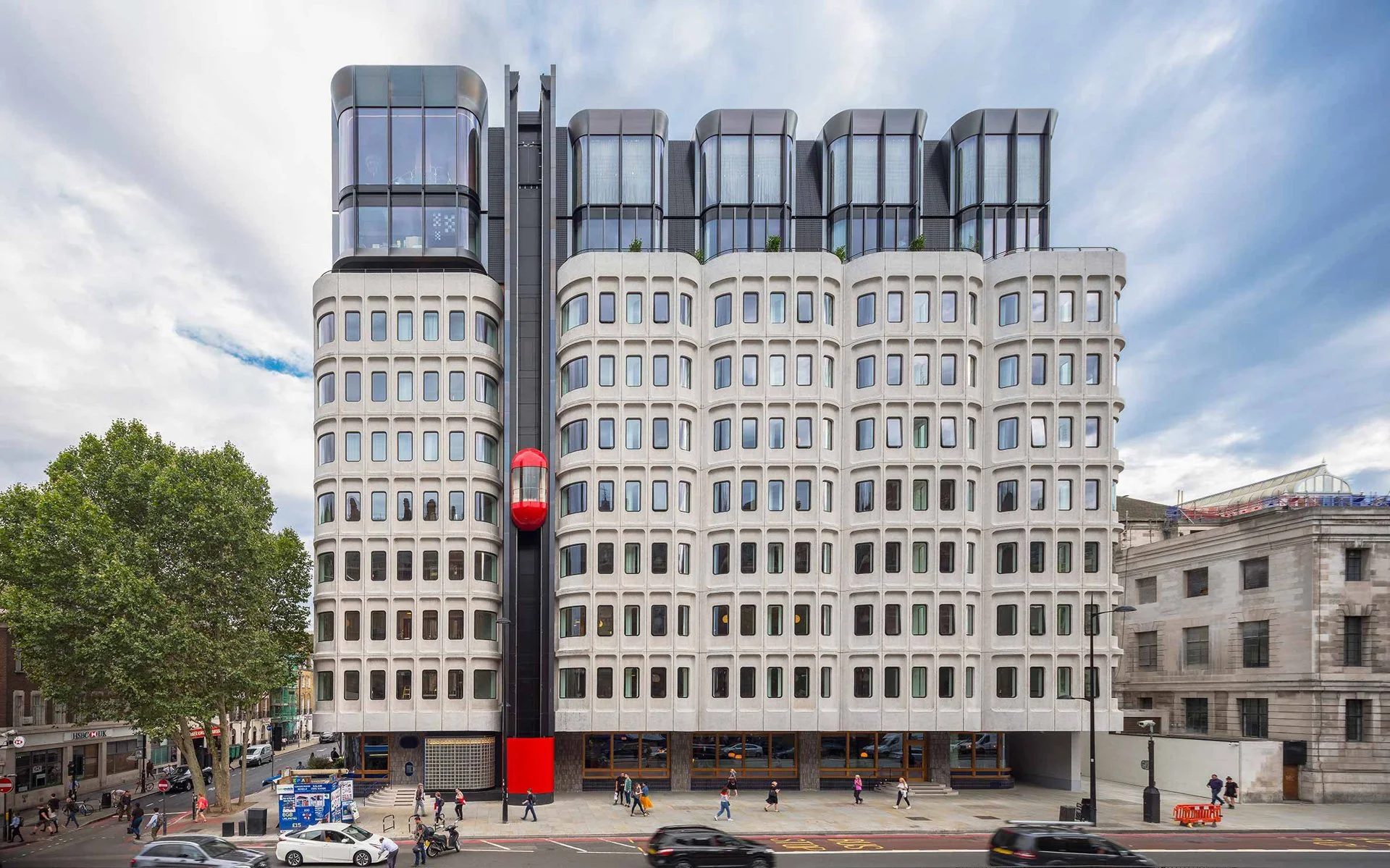
The Standard London
King's Cross
The opposite instinct, executed with equal conviction.
Bold minimalist mark, retro-futuristic interiors, a brand voice that's genuinely funny. What's interesting commercially is that it makes luxury feel accessible without making it feel cheap, which is a narrow line most concepts fall off.
It's also the most photographable hotel on this list, and that isn't an accident. The brand was designed knowing that most people would encounter it on someone else's phone first.

Town Hall Hotel
Bethnal Green
I've worked with Town Hall for five years, so I'll declare the interest.
It sits in a restored Edwardian town hall in Bethnal Green, and the positioning question was whether it was a hotel with an interesting building or a cultural destination with a hotel in it. Settling that changed everything downstream: the monogram, the material palette of marble, brass and dark wood, and how the whole thing speaks.
The lesson that travels is that the building isn't the brand. What you decide the building means is.
View the Town Hall Hotel project →

The NoMad London
Covent Garden
Set in the former Bow Street Magistrates' Court, and the most theatrical brand here.
Classic serif wordmark, moody photography, interiors that are unapologetically dramatic. The reason it works is commitment: nothing about NoMad is hedged, and a brand this bold would collapse if any part of it apologised.
Worth noting how much of the identity lives in the food and cultural programming rather than the graphics. The brand is what happens in the building.

The Londoner
Leicester Square
Branded as the world's first "super boutique" hotel, which is a category invented to describe itself.
That's a legitimate strategy and it's rarer than it should be. Rather than competing inside an existing category, The Londoner defined a new one and claimed it. The identity is deliberately understated so the architecture leads.
The risk with an invented category is that nobody adopts it. The advantage is that if they do, you own it outright.

The Hoxton
Shoreditch, Southwark, Holborn
The best example on this list of a brand built to scale without losing itself.
The Hoxton started as an alternative to corporate hotels and became a global group, which usually kills exactly the quality that made it work. It survived by defining the brand around behaviour rather than aesthetics: how the lobby is used, how the tone sounds, how local the programming feels.
A brand built on a look doesn't travel. A brand built on a way of operating does.
What they have in common
Four things, and none is design quality.
They've decided what kind of place they are. Not what they look like. What they are. Every one of these could be described in a sentence by someone who has stayed there.
The brand lives in the building, not on it. The strongest signals are material, spatial and behavioural. The logo is the smallest part.
They're consistent to the point of stubbornness. Hotels are under constant pressure to refresh. The ones that hold their character are the ones people return to.
They know how they'll be encountered. Most guests meet the brand on a booking site, in someone else's photograph, or on a phone at 11pm. The brands that account for that are the ones you recognise before you arrive.
What independent operators can take from this
Most of the above is available at any scale. None of it requires a Mayfair budget.
Deciding what kind of place you are is free. Consistency is free. Understanding how guests actually find and choose you is a matter of attention rather than money.
What a group has that an independent doesn't is the discipline to write it down so a hundred people can apply it. That's usually the gap, and it's the part worth paying for. If the brand no longer matches what the hotel has become, that's a positioning question before it's a design one.
If it's a new property or a repositioning that needs building out properly, that's Brand Creation.
Tell me what you're building
If you're opening a hotel, repositioning one, or trying to work out whether the brand is holding the business back, tell me where you are and I'll come back to you within a working day.