Starting a restaurant concept in Dubai

Dubai is one of the hardest restaurant markets in the world to stand out in, and not for the reason people assume.
It isn't that the competition is bad. It's that almost everyone is already very good. The money is there, the design is there, the food is often excellent, and international operators arrive with brands that have already been proven somewhere else.
So the question isn't whether your concept is good enough. It's whether anyone can tell what it is within about four seconds of encountering it.
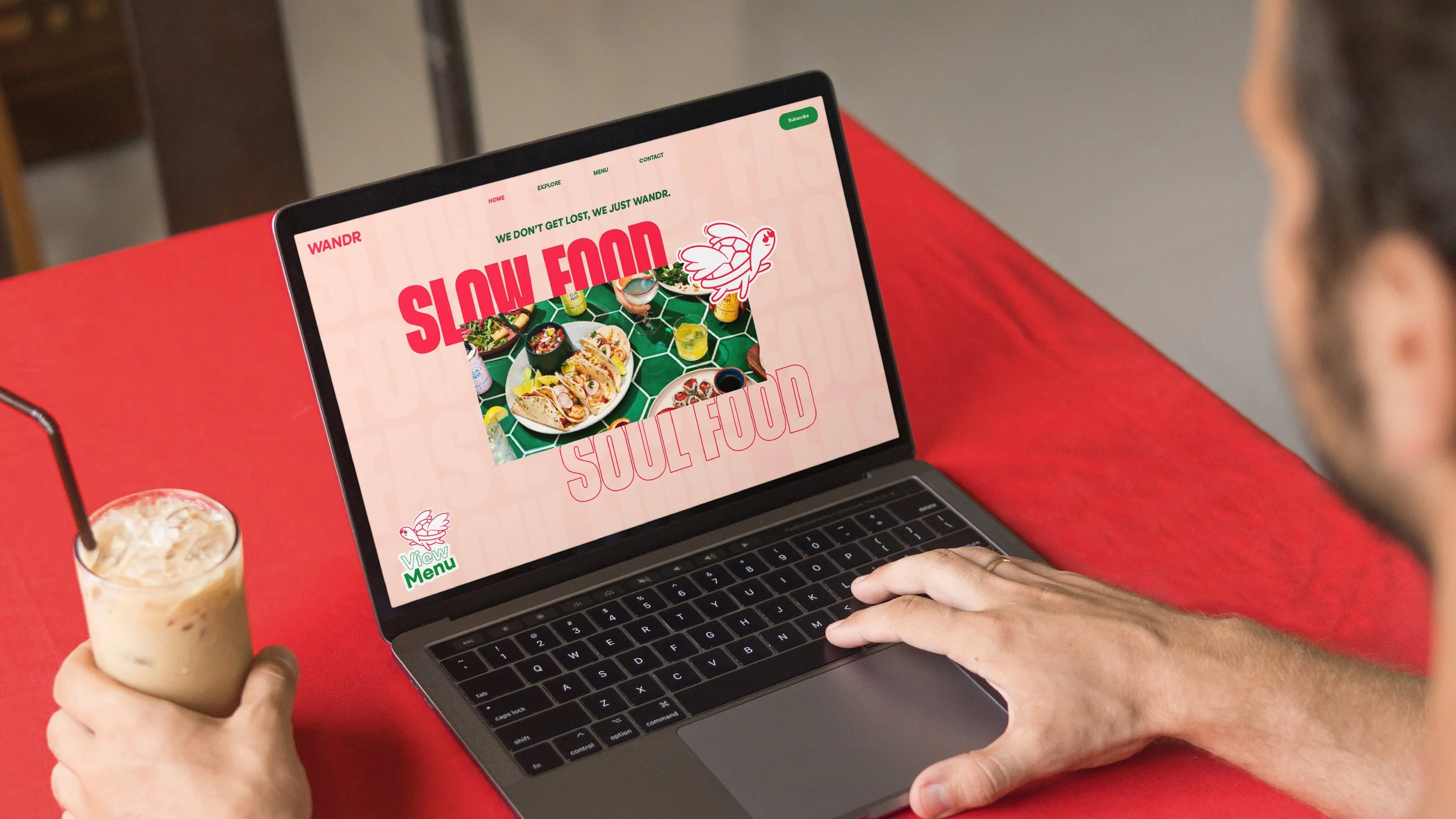
Start with what you'd be to someone who has a hundred alternatives
Positioning matters everywhere. It matters more here because the alternative set is enormous and your customer is often deciding between concepts rather than between restaurants.
Work out what you stand for, who exactly you're for, and what you can own that the place two doors down can't. Not the food, usually. The food is the price of entry. What people are choosing is the idea of the place, and how it makes them feel about themselves for being there.
Burro Blanco grew from a single hole-in-the-wall site into a brand with a genuine following in the UAE. What made it work wasn't polish. It was that it knew exactly what it was, and never pretended to be more than that.
Naming: think about how it will be said, not just how it looks
Dubai's audience is extraordinarily international. Your name will be said by people from dozens of language backgrounds, and often over noise.
That has practical consequences. Keep the sound simple. Avoid words that only make sense in one language or that depend on a pun. Say it out loud as if you're taking a booking over the phone.
Then check it properly: domains, social handles, and international trademark databases, because a name that's free in the UK may not be free here.
And consider how it works written in both English and Arabic. If the business might need a bilingual wordmark, it's far cheaper to plan for it now than after the signage is made. I've written more about this in how to name a brand.

Design for the way people actually find you
In this market a huge amount of discovery happens on a phone before anyone walks through a door. Delivery platforms, Instagram, a friend's story.
Which means the brand has to work at small scale, in bad lighting, on someone else's grid, cropped square, before it ever gets to work at full size on a shopfront.
Practically:
The logo needs a version that survives being tiny
The colour palette needs to be recognisable in a photograph taken by a customer, not just in your own photography
Packaging is a brand asset here more than in most markets, because a lot of your product is seen in someone's kitchen rather than in your dining room
Whatever makes the place distinctive needs to be visible in a picture
The brands that grow fastest here tend to have something in the physical space that photographs well and belongs only to them.
Apply it consistently, and write down how
Consistency is what separates a brand from a good-looking restaurant.
Once the identity exists, it has to be applied the same way across the menu, the signage, the packaging, the delivery inserts, the social feed and the uniforms. That means writing the rules down rather than holding them in your head, especially if you're planning more than one site or working with a team who joined after launch.

Sound like something
Tone of voice is the most neglected part of a restaurant brand and one of the cheapest to get right.
Your captions, menu descriptions, signage and the way your team greets people all say something about who the business is. In a market where a lot of concepts look similar, sounding distinctive is one of the few advantages that can't be copied by a competitor with a bigger budget.
Decide what the brand sounds like, what it never says, and what it's like when it's being funny. Then write it down for whoever handles the account next.
A few things worth knowing about this market
Everyone is well designed. Design alone doesn't differentiate here. Clarity does.
Audiences move. A significant part of the customer base is transient, so word of mouth builds and disperses faster than in a settled neighbourhood. The brand has to do more of the explaining.
Seasonality is real. The rhythm of the year affects trade and how people go out. Plan your launch and your content around it rather than fighting it.
Cultural fit isn't a design question. It's a positioning one, and it's much easier to answer before you commit than after.
Where to start
If you're at concept stage, start with brand strategy and positioning. It's the cheapest part of the process and it determines whether everything after it works.
If the concept is defined and you need the whole thing built, name included, that's brand creation, and it's usually around twelve weeks, or closer to twenty with launch materials and a website.
Tell me what you're opening
If you're building a concept for Dubai or the wider region, I'd like to hear about it. Tell me where you are and I'll come back to you within a working day.